Six stool changes that mean call the vet
A vet-informed field guide to the changes in dog poop a trained eye notices first.
If you've got more than one dog, you already know the math doesn't add up the way you'd hope. Two dogs aren't twice the mess of one. Three dogs aren't three times. It compounds. And if you're a busy family trying to claw back your weekends, the yard is usually the chore that quietly takes over.
I run Scoopie here in Utah County, and multi-dog homes are some of my favorite yards to service. So let me walk you through exactly what changes when you've got a pack at home, what it costs, and what I wish more multi-dog owners understood.
Yes, but probably less than you'd think.
The process itself is the same as a single-dog yard. I use the same method, I cover the same ground, and I'm just as thorough. Depending on how many dogs you have, a multi-dog visit usually adds somewhere between 10 and 30 extra minutes. That's it. The work scales, but it doesn't balloon.
What's interesting is that more dogs doesn't always mean a harder yard to read. A lot of dogs are territorial about where they go. In one of my three-dog households, all similar-size pit bull mixes, each dog has claimed its own corner of the yard. They each do their business in separate zones. That actually makes my job cleaner and more organized, not messier.
If you've heard me talk about the Pet Health Partner System, you know that on Standard plans and up, I'm checking what I scoop for warning signs: blood, parasites, abnormal patterns, foreign objects, and changes in color or consistency.
With one dog, attribution is simple. Every pile belongs to that dog. With multiple dogs of the same size, it gets harder to know whose stool is whose. If I spot something concerning, I can't always tell you with certainty which dog it came from just by looking.
Here's how I handle that. I'll ask you a few questions about your dogs and their habits, where each one tends to go, who's been eating what, anything you've noticed. Combine your day-to-day observations with what I'm seeing in the yard, and we can usually narrow it down to a really good idea of which dog needs a closer look. You know your dogs. I know the waste. Together it works.
This is where a lot of people brace themselves, expecting to pay per dog. You don't.
My plans are built to cover two dogs right out of the gate:
So if you've got three dogs, that's your plan price plus $8. Four dogs is your plan price plus $16.
Think about what $8 a month actually is. It's about a quarter a day to have a trained set of eyes keeping one more dog's yard clean and one more dog's health monitored every single week. I've never had a customer tell me that felt unfair once I laid it out that way. More dogs does not mean proportionally more cost with me. It means a small, predictable add-on and a whole lot less work for you.
I want to share something recent, because it's exactly why I care so much about this.
I service that three-dog pit bull mix household I mentioned earlier. On June 21st, 2026, while cleaning their yard, I found blood in one of the dogs' stool.
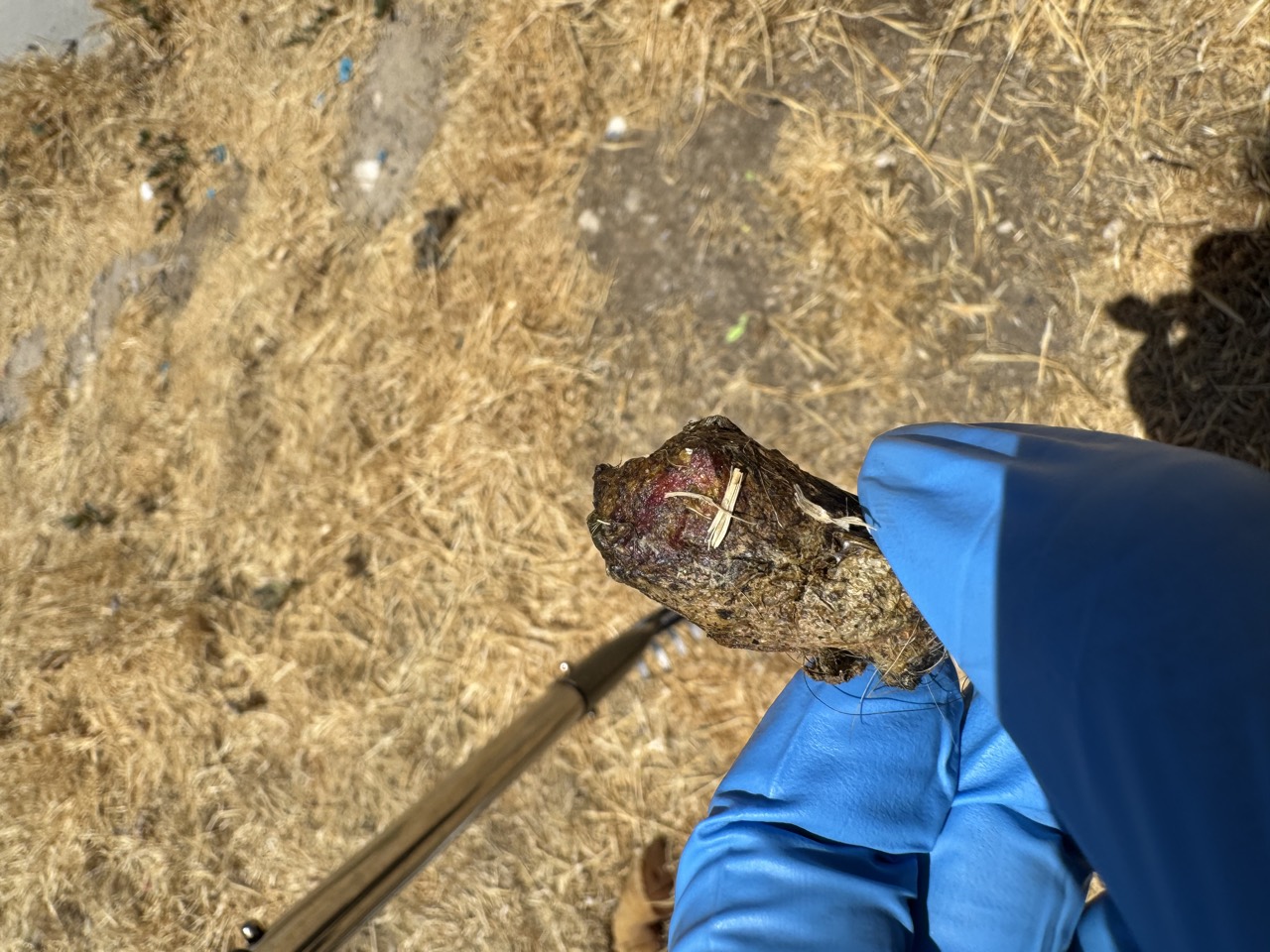
I notified the customer immediately. That's the whole point of the Pet Health Partner System. I'm not there to diagnose anything, and I want to be very clear about that, because diagnosing is a hard line I never cross. That's the vet's job. My job is to be the early warning. I flag what I see, the moment I see it, and I get that information to you fast so you can decide what to do next. In this case, the family is monitoring their dog closely now, watching to see if it clears or if it's time for a vet visit.
That catch happened in a multi-dog yard, in the exact situation that's hardest to read, three same-size dogs. It's proof that even when attribution is tricky, paying attention still saves dogs.
If you take one thing from this post, let it be this. The biggest risk in a multi-dog household isn't the inconvenience of the mess. It's sanitation.
The more dogs you have, the more waste sits in your yard between cleanups. And the more waste sits there, the more likely your dogs are to track their own feces right back into your house. Onto your floors. Onto the carpet your kids play on. That's not just gross. It's a genuine health hazard for everyone under your roof, especially young children and elderly family members whose immune systems are more vulnerable.
People think of dog waste removal as a luxury or a convenience. In a multi-dog home, it's closer to basic household sanitation.
For most multi-dog households, weekly service is the realistic standard I'd recommend. It keeps the volume from ever building to the point where it becomes a tracking-and-sanitation problem.
I'll be honest with you about something. In an ideal world, a heavy multi-dog yard would do best with twice-weekly visits. I used to offer that. These days I service yards on weekends only, so weekly is what I provide, and for the vast majority of multi-dog homes, a consistent weekly visit absolutely does the job.
I want to talk directly to a specific person for a second.
You love your dogs. You wouldn't trade them. But the yard has gotten away from you. Between work, the kids, and everything else, the weekend cleanup keeps losing. And somewhere along the way it got bad enough that you've stopped inviting people over. You don't want anyone walking out back and seeing how far it's gone.
I see you, and there's no judgment here. This is the most common reason multi-dog families call me, and getting that yard back is one of the most satisfying parts of my job.
So here's my pitch, plain and simple. Stop spending an hour or more of your precious weekend bent over a scooper. Use that time for what actually matters, your kids and your dogs. Let me get your yard back to a place you're proud of, so you can throw the gate open and have people over again without a second thought.
That's what this service really is. It's not about poop. It's about your weekends, your family, and your home feeling like yours again.
Two dogs or five, your plan covers the first two and it's just $8 a month per extra dog. Weekly cleanup, a wellness check on every Standard visit, and your weekends back.
 Pet health
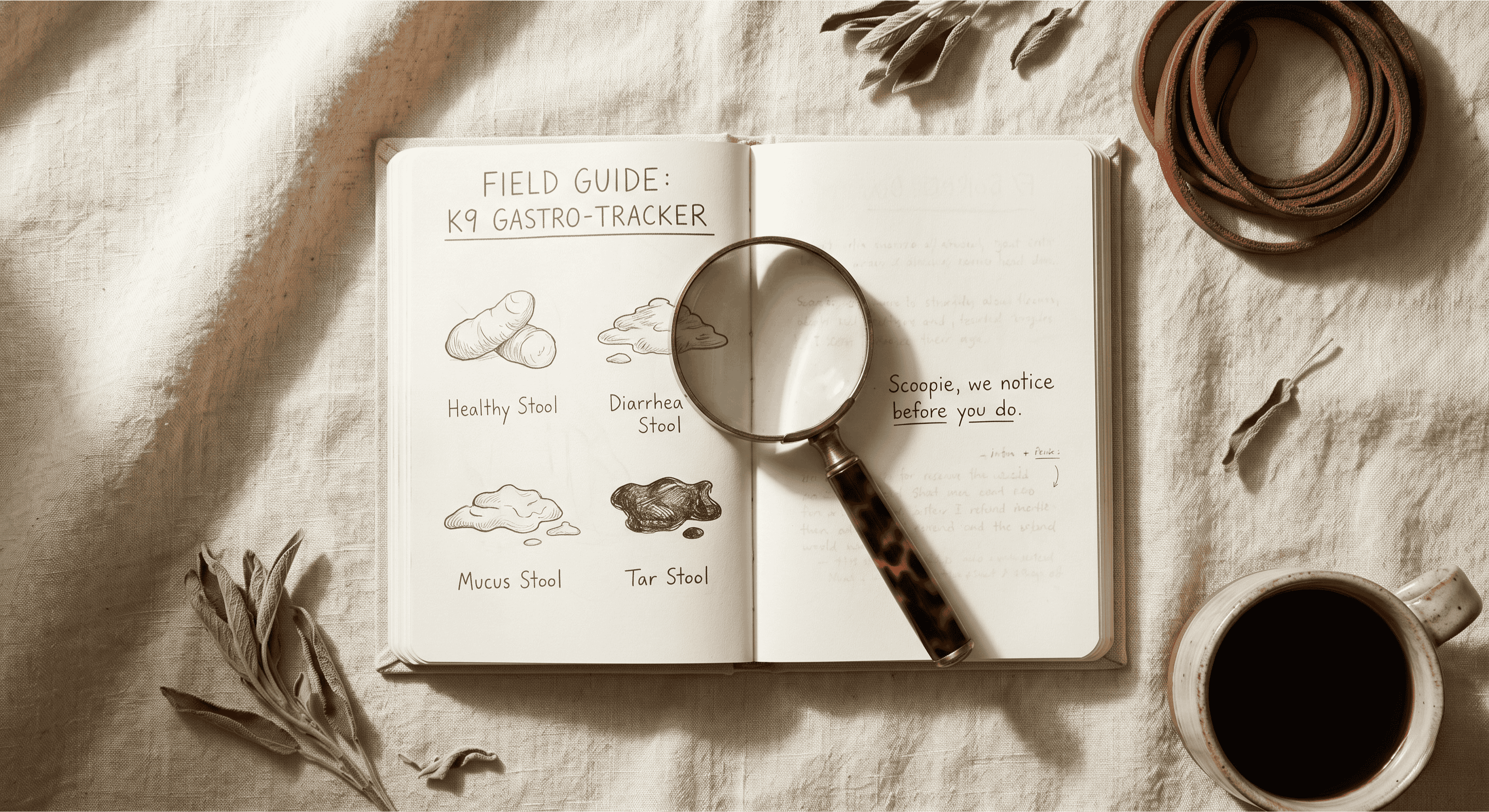
A vet-informed field guide to the changes in dog poop a trained eye notices first.
 Yard wellness
A vet-informed guide to how long dog waste stays infectious, and the disinfectants that work.
 Pet safety
What it really takes to make a shared family yard safe for bare feet and little hands.
Weekly visits, trained eyes on every pile, and your first two dogs included. Reach out and let's get your Utah County yard back.